If I were rebuilding my marketing stack today, I would not start with the biggest AI tool list.
I would start with the workflows where AI actually changes the output: research, content, creative, paid media, lifecycle, automation, and GTM data.
The best AI marketing tools are not always the most impressive demos. They are the tools that help a marketer make a better decision, ship faster, or connect a messy workflow without losing control.
Quick Verdict
My short list looks like this:
| Workflow | Best tools to evaluate | Why |
|---|---|---|
| Strategy and writing | Claude, Jasper, Copy.ai | Turns context into briefs, copy, and campaign systems |
| SEO and AEO | Semrush, Surfer, Frase, Writesonic | Helps with search demand, briefs, optimization, and AI visibility |
| Creative | Canva Magic Studio, AdCreative.ai | Speeds up asset iteration for ads and campaigns |
| Automation | Gumloop, Zapier, Make | Connects tools and creates repeatable marketing workflows |
| Data activation | Hightouch, HubSpot Breeze | Moves first-party data into campaigns and CRM workflows |
| Paid media | AdQuick, Vector, Optmyzr | Helps with audience, channel, and optimization decisions |
| Outbound assist | Clay, Instantly, Smartlead | Supports research, enrichment, and campaign execution |
For a more personal version of this stack, read my field note on the 30 AI marketing tools I am using and evaluating.
How I Evaluate AI Marketing Tools
I use five questions before I take a tool seriously:
- Does it sit inside a real marketing workflow?
- Does it help with better data, not just faster output?
- Can a human review and steer the result?
- Does it reduce work without creating hidden QA problems?
- Would I still want the tool if the AI label disappeared?
That last question is useful. A lot of AI software is a familiar tool with a thin AI wrapper. That is not automatically bad, but the tool still needs to improve the workflow.
Best AI Marketing Tools By Workflow
Claude
Claude is my default AI copilot for strategy, long-form writing, analysis, and internal workflow thinking.
I like Claude when I need to turn messy context into something structured: a content brief, a positioning memo, a landing page outline, a customer research synthesis, or a prompt workflow. The tool is especially useful when I can feed it real source material and ask it to reason through tradeoffs.
Use Claude when you need flexible thinking and writing support. Do not use it as a replacement for research, customer understanding, or editorial judgment.
Clay
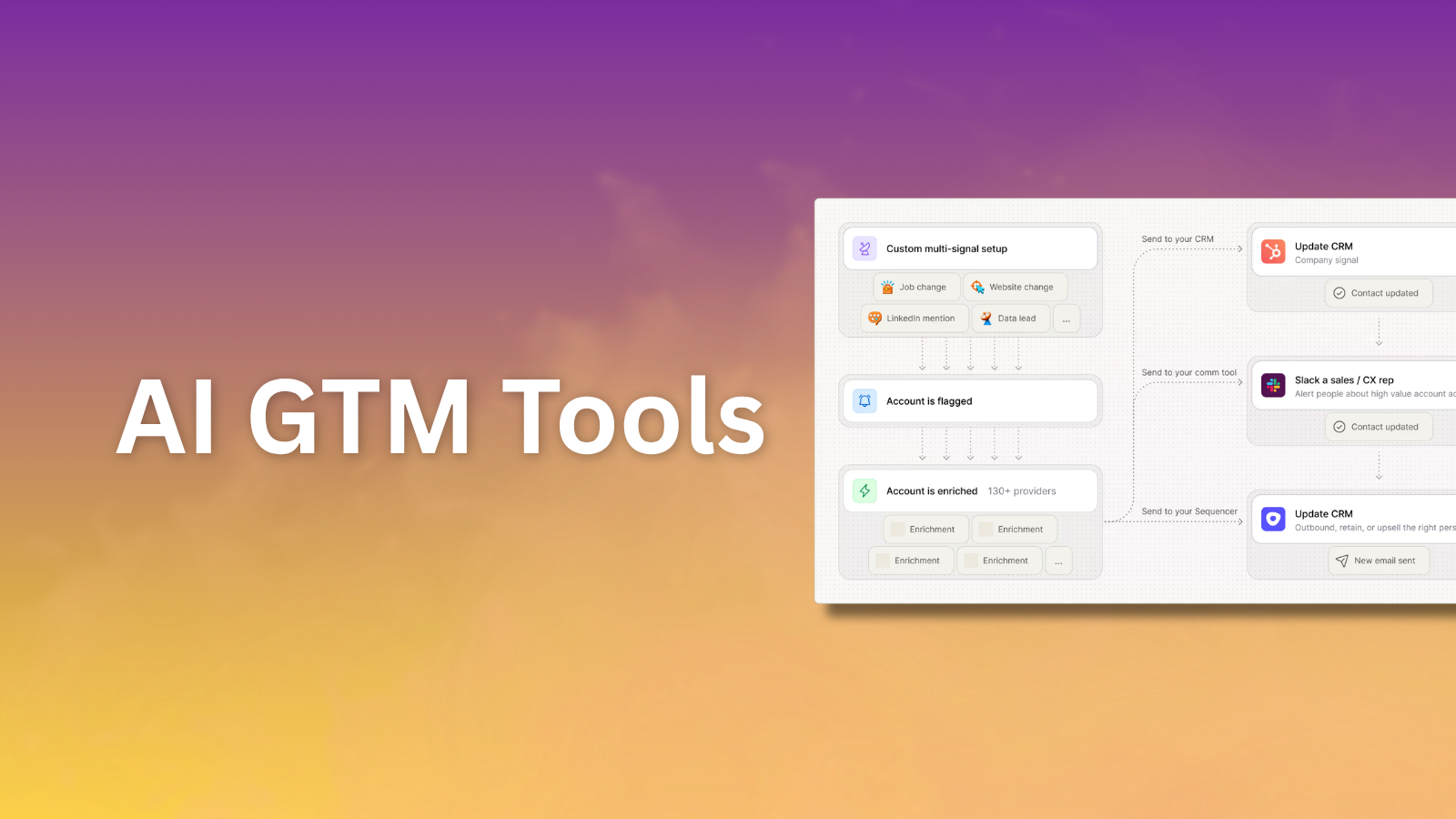
Clay belongs in the marketing stack because modern marketing depends on better GTM data.
Clay combines enrichment, AI research, intent signals, and workflow building. For marketing teams, that means it can help with account research, ABM lists, lead scoring, outbound personalization, and audience building.
Use Clay when your bottleneck is finding, enriching, or acting on better account and contact data. Be careful if you do not yet have a clear ICP, because Clay can make a bad list look more sophisticated.
Hightouch
Hightouch is most useful when a company already has meaningful first-party data in a warehouse.
The marketing use case is activation: build audiences from customer data, sync them into ad platforms, trigger lifecycle campaigns, and personalize journeys based on actual customer behavior.
Use Hightouch when marketing is ready to operate from the warehouse. Skip it if your data layer is not ready.
Gumloop
Gumloop is an AI automation platform that makes sense for marketers who are turning repeatable work into workflows.
I would use it for competitor monitoring, content research, enrichment QA, reporting, and internal marketing ops. It is especially interesting because growth work is increasingly a chain of data pulls, AI decisions, and handoffs.
Use Gumloop when the workflow repeats often enough to deserve automation.
Semrush
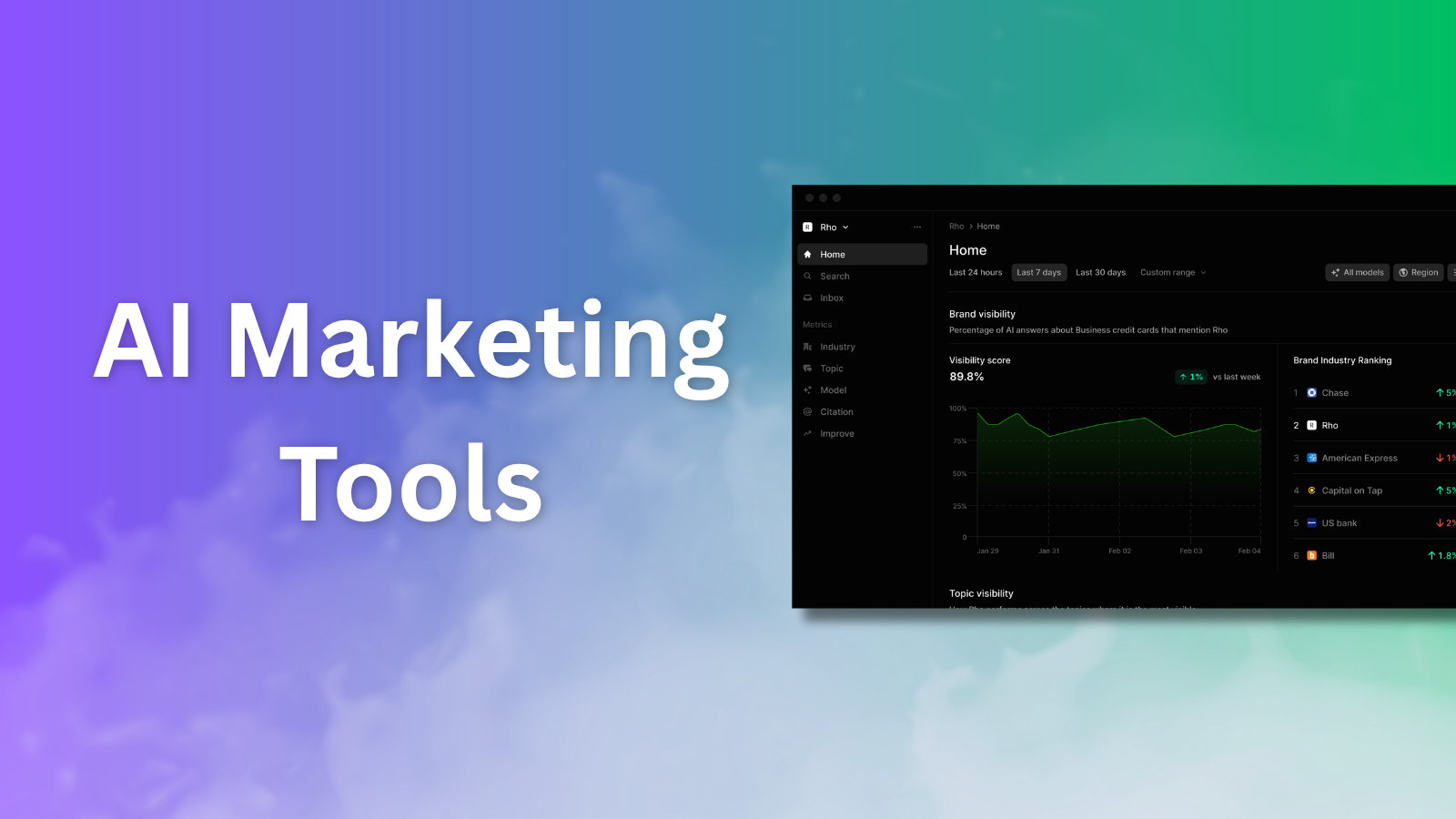
Semrush remains one of the strongest tools for SEO, competitive research, and search visibility. It is also useful as AI search and traditional search start to blend in how buyers discover brands.
Use Semrush for keyword research, competitor research, content gap analysis, PPC research, and AI visibility monitoring.
Surfer
Surfer is useful when you want to improve a piece of SEO content against the competitive set.
I would not let Surfer write the article. I would use it as a diagnostic tool: what topics are missing, which terms are undercovered, and where the content is too thin.
Jasper
Jasper is strongest when a marketing team needs controlled, on-brand content workflows.
If you are a solo operator with strong Claude workflows, Jasper may feel redundant. If you are managing a team, campaigns, brand voice, and approval flows, Jasper becomes more interesting.
Copy.ai
Copy.ai has moved from generic copywriting toward GTM workflows. That makes it more relevant than old-school AI writing tools.
Use it when you want repeatable workflows for account research, campaign copy, outbound messaging, event promotion, or sales and marketing handoffs.
Canva Magic Studio
Canva Magic Studio is not the deepest creative platform, but it is one of the most practical tools for marketers.
It helps with quick campaign assets, social graphics, ad mockups, presentations, and image generation. The advantage is speed and accessibility.
AdCreative.ai
AdCreative.ai is built for generating ad creatives and variations.
I would use it for paid social testing, e-commerce creative, and early campaign concepts. I would not expect it to fix a weak offer or unclear positioning.
HubSpot Breeze
HubSpot Breeze matters if HubSpot is already your CRM and marketing system.
AI inside the CRM can help with segmentation, follow-up, content, data quality, and sales/marketing handoffs. The tool is only as useful as the CRM data underneath it.
AdQuick
AdQuick is useful for planning, buying, and measuring out-of-home campaigns. It is not the first tool most early-stage B2B teams need, but it opens up an underused paid media channel.
Use it when you have a strong market, clear geography, and a campaign where out-of-home can support awareness or category creation.
Vector
Vector is interesting because it pushes paid media closer to contact-level audiences.
For B2B marketers, the value is sharper retargeting and audience building. I would evaluate it for LinkedIn, Google, Meta, Reddit, and other paid channels where broad targeting creates waste.
My Recommended Starter Stack
For a lean B2B SaaS marketing team, I would start with:
- Claude for strategy, writing, and analysis.
- Semrush or Surfer for SEO and content.
- Clay for GTM research and enrichment.
- Gumloop for repeatable automations.
- Canva or AdCreative.ai for fast creative.
- HubSpot if the CRM is central, or Hightouch if the warehouse is central.
If outbound is a major channel, add Instantly or Smartlead and connect it to the AI outbound system.
Where AI Marketing Tools Break
AI marketing tools usually fail for boring reasons:
- The audience is not defined.
- The data is stale.
- The prompt has no real context.
- The review step is skipped.
- The tool is bought before the workflow is understood.
- The team measures output instead of pipeline.
The lesson is simple: do not build a stack around software categories. Build it around the marketing work that needs to improve.
Related Reading
- 30 Best AI Marketing Tools I'm Using to Get Ahead in 2026
- Best AI GTM Tools
- Best AI Growth Tools for B2B SaaS
- AI Paid Search Automation