If I were building a B2B SaaS growth stack from scratch, I would not look for one magic AI platform.
I would build around the workflows that actually create and protect pipeline: targeting, data, outbound, content, paid media, conversion, lifecycle, and measurement.
Quick Verdict
The best AI growth stack for B2B SaaS is usually a layered stack:
| Growth job | Tools to evaluate | Why |
|---|---|---|
| Research and strategy | Claude, Semrush, Crayon | Understand the market and shape the message |
| GTM data | Clay, Apollo, ZoomInfo, Clearbit, People Data Labs | Build cleaner account and contact lists |
| Outbound | Instantly, Smartlead, Regie.ai, 11x, Artisan | Create pipeline from targeted accounts |
| Marketing and content | Jasper, Copy.ai, Surfer, Frase, Writesonic | Build search and campaign assets faster |
| Paid media | Vector, AdQuick, Optmyzr, AdCreative.ai | Improve targeting, creative, and spend control |
| Lifecycle | HubSpot, Hightouch, ActiveCampaign | Activate first-party data and nurture demand |
| Measurement | HockeyStack, Dreamdata, HubSpot, Salesforce | Tie activity back to pipeline |
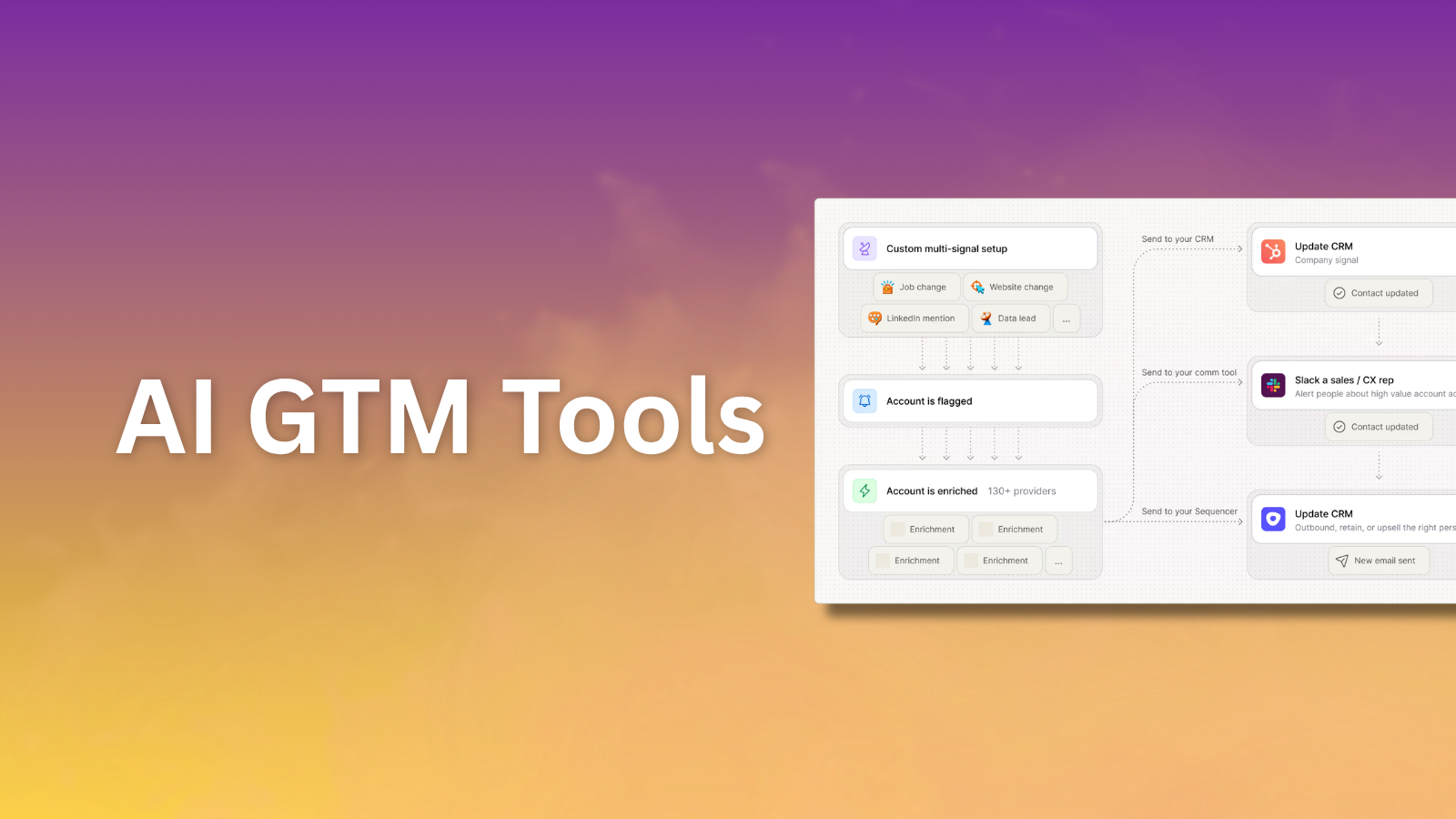
If you want the broad tool category map, start with Best AI GTM Tools. This page is the B2B SaaS stack view.
The B2B SaaS Growth Workflows I Care About
For B2B SaaS, tools should map to a growth motion. I care about seven:
- ICP and market research
- Account and contact data
- Outbound and AI SDR workflows
- Content, SEO, and AEO
- Paid acquisition and retargeting
- Lifecycle and expansion
- Attribution and pipeline measurement
If a tool does not strengthen one of those workflows, I would be careful about adding it.
Best Tools By Growth Motion
Market research and positioning
I would use Claude for synthesizing customer notes, competitor pages, sales calls, and positioning ideas. I would pair it with Semrush for search and competitor demand, and Crayon when competitive intelligence becomes a recurring need.
This layer matters because growth tools cannot fix a vague market point of view.
GTM data and enrichment
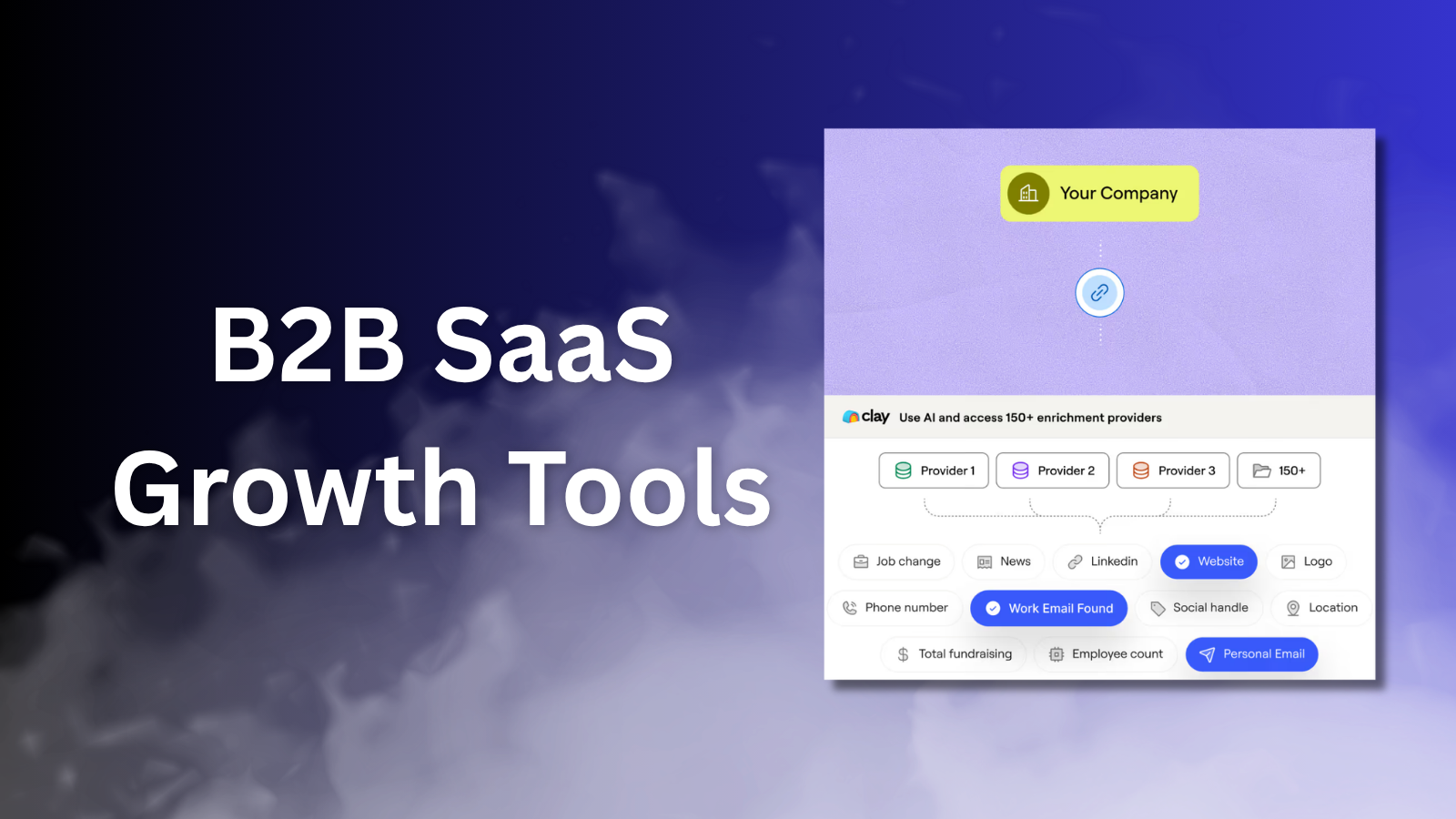
For data, I would evaluate Clay, Apollo, Clearbit by HubSpot, People Data Labs, and FullEnrich.
Clay is the flexible workflow layer. Apollo is the easier database plus engagement platform. Clearbit is useful inside the HubSpot orbit. People Data Labs is more developer/API-oriented. FullEnrich is interesting for waterfall enrichment.
This layer matters because targeting quality determines campaign quality.
Outbound and AI SDR
For outbound, I would look at Instantly, Smartlead, Regie.ai, 11x, and Artisan.
My bias: do not start with "autonomous SDR" as the goal. Start with a controlled outbound system. AI should help with account research, timing, personalization, and follow-up, but humans should still own the strategy and review loop.
The deeper workflow is covered in How to Build an AI Outbound System.
Content and AI marketing
For content, I would use Claude as the thinking layer, Semrush for demand and competitive research, Surfer or Frase for optimization, and Jasper or Copy.ai when team workflow and brand consistency matter.
The key is to avoid using AI to publish more generic content. Use it to build sharper briefs, faster updates, better internal research, and stronger editorial systems.
Paid acquisition
For paid media, I would separate the work:
- Use AdCreative.ai or Canva for creative iteration.
- Use Vector for sharper B2B audience targeting.
- Use Optmyzr or Opteo for paid search workflow support.
- Use AdQuick if out-of-home makes sense for the market.
Paid acquisition is dangerous when automation hides waste. The goal is better inputs and faster testing, not blind budget delegation.
Lifecycle and customer data
For lifecycle, I would use HubSpot Breeze if HubSpot is the CRM base. I would use Hightouch if the company has strong warehouse data and needs to activate audiences across tools.
This becomes more important after acquisition starts working. Expansion, activation, and retention need cleaner data than most early growth stacks have.
Measurement
For measurement, I would start simple: CRM hygiene, campaign source discipline, and pipeline reporting. Then I would evaluate tools like HockeyStack, Dreamdata, HubSpot, or Salesforce depending on the company's stage.
AI can summarize performance, but it cannot rescue broken attribution foundations.
Recommended Starter Stack By Stage
Founder-led sales
- Claude
- Apollo
- Clay
- Instantly or Smartlead
- HubSpot
- Semrush
Early growth team
- Claude
- Clay
- Apollo
- Smartlead
- Semrush or Surfer
- Gumloop
- HubSpot
Scaling GTM team
- Clay
- Hightouch
- HubSpot or Salesforce
- Regie.ai or Unify
- Vector
- Optmyzr
- HockeyStack or Dreamdata
Tools I Would Avoid Adding Too Early
I would be careful adding:
- Enterprise CDPs before data quality is real.
- Fully autonomous SDR tools before the outbound motion is proven.
- Expensive attribution tools before CRM discipline exists.
- Creative automation before the offer is clear.
- Too many enrichment tools before the ICP is tight.
The early stack should create learning speed. It should not become a museum of unused software.
Related Reading
- Best AI GTM Tools
- Best AI SDR Tools
- Best AI Marketing Tools
- Best GTM Data Enrichment Tools
- How to Build an AI Outbound System